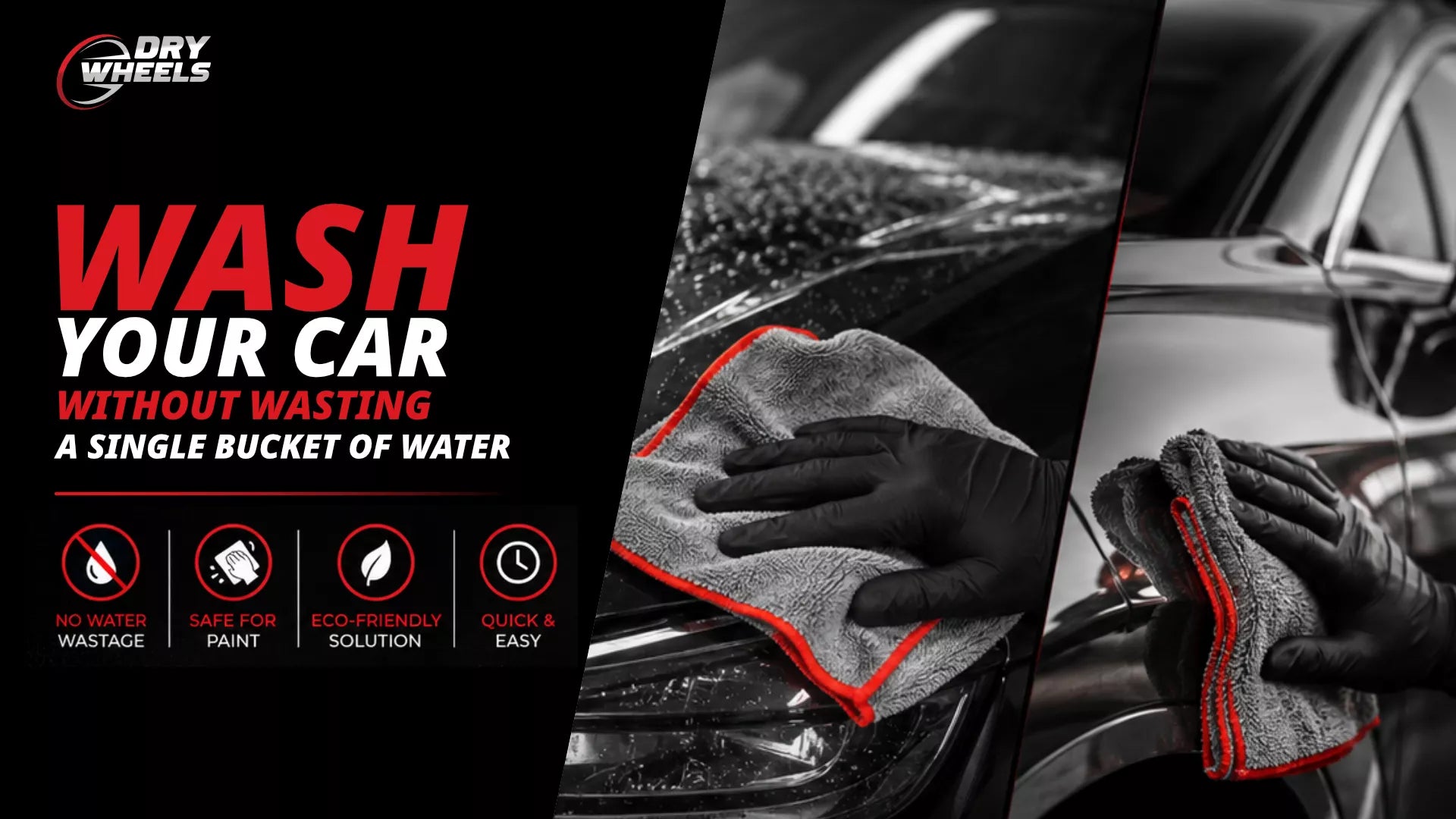
How to Wash Your Car at Home in India Without Wasting a Single Bucket of Water
Maintaining the cleanliness of the car in India will not be a smooth challenge. Because dust accumulates on cars almost daily, especially in areas where visitors to the site are crowded and construction is active, a freshly dried clean car in the summer may seem dusty after a few hours. Most vehicle owners generally keep their cars very smooth; But, this may require different water.
As water conservation is increasingly becoming a necessity in certain areas of India, it may be smart to revisit vintage methods of doing things when it comes to washing vehicles. The daily hose-washing system uses several liters of water in a single run. Considering the large number of cars on our roads, the amount of water required by such processes becomes very high.
The positive side is that one can clean his/her car efficiently without having to waste any water. Thanks to advanced technologies, and to know how to wash car without water.
Why Traditional Car Washing Wastes So Much Water
It turns out that a lot of people underestimate the quantity of water wasted during a car wash at home. The water left running for the purposes of washing, cleaning, and scrubbing may waste from 200 to 500 litres of water.
The problem is not with the act of washing but rather with its accompaniments. In their quest for cleaning, many people leave the water running despite not needing it. While buckets appear more efficient, frequent rinsing results in the same amount of waste.
This problem becomes especially significant in areas affected by a lack of fresh water. Choosing a more reasonable way to wash the car will enable you to contribute to environmental protection efforts.
The Rise of Waterless Car Cleaning
The technique of car washing without using water has gained popularity among all those who are interested in cars, especially detailing experts and environmentally friendly drivers. In contrast to washing with plenty of water, which helps to get rid of dirt by loosening it, special lubricants and cleansers used during waterless washing help to remove dust particles.
In addition, these cleaning agents protect the paint from damage while wiping since they enclose particles of dirt, making scratching impossible.
Nowadays, many Indian owners try to figure out how to wash a car without using water, taking into account various circumstances, such as lack of water supply in cities and inability to use a garden hose.
When Waterless Washing Works Best
You can wash a car without water very efficiently, it is essential to know when it can be applied.
A waterless wash will suit you if there is:
● Light dust
● Driving through the city every day residues
● Bird droppings and other small pollutants
● Smudges on car windows
● The car, which has been washed, now needs a few cleanings
However, if your car is very dirty from mud, sand, or other dirt that you got from using places that are not ideal, it may be essential to wash your car with water .
Materials needed for waterless car washes
For a successful wash, it is essential to gather quality tools and products. Using premium, effective products will also help to reduce the impact on your car’s finish.
For a Waterless Wash
To help wash the engine, get a professional-grade wash a car without water. Do not use standard family cleaners. These will remove the protective coatings and will also be harmful to the automotive paint.
For Microfiber Cloths
In order to achieve maximum efficiency, the usage of microfiber cloths will be required. It is known that microfiber absorbs all dust and dirt better than any other cleaning tool for surfaces and is also very gentle.
For Spray Bottles
In case you don’t have a spray applicator for the product, then you will have to move it to a spray bottle. You should ensure that the bottle chosen is big enough to be visible.
Step-by-step Process for Cleaning Your Car with Water from Manual
Step 1: Find a shaded spot where the car is located
There may be a fast drying of the water and even a few watermarks showing up on the bodywork after you wash the car. So to avoid that kind of thing, try to find a shaded area while you’re waxing your car.
Step 2: Inspect Your Car
Circumvent your vehicle and observe its general state. Identify sections of the vehicle that may be heavily contaminated or have mud splash and abrasives on them.
If you find any areas that might be quite dirty after using a pre-cleaning product, you may want to moisten those areas with plain water before using the waterless rinse .
Step 3: Sprinkle generously
The waterless wash to the steering wheel of your vehicle, but don't apply the waterless wash to the entire vehicle at one time; do a small area of the vehicle in order to limit how much product will be wasted while spraying.
Step 4: Direct Drying
Using a suitable microfiber cloth, dry the area with a one-way stroke. Make sure that you no longer use a circular motion, considering that this can increase the amount of swirl marks that appear.
Select a favorable mulch to scrub the material area vigorously.
Step 5: Turn Over Towel and Replace Often
As the towel gets dirty, change to another part of it. Using a dirty towel will just bring more dirt, which may cause scratches.
Most detailers always change towels several times while washing their cars.
Step 6: Polish It
Once the dirt has been removed from the car surface, use a new microfiber towel to polish its surface.
The end product will be similar to that of normal washing followed by quick detailing.
Common Mistakes to Avoid
Using Old Towels
Towels that may be too vintage do not retain dirt nicely. Inspect microfiber towels before use and discard broken ones.
Clean a very dirty vehicle without water
Waterless systems are only suitable for cleaning gently or moderately dirty engines. Very dirty vehicles may also require an unusual method.
Not enough detergent is used
This will cause rapid friction between the towel and the vehicle and may damage it. Apply enough cleanser to moisten the area.
Speed up the process
A little perseverance will release the extended type to save your car ready to arrive.
Protect Your Vehicle After Cleaning
Using certain safety methods in the car after cleaning makes the results final and lasting.
Some of the options available are:
● Spray wax
● Paint sealants
● Ceramic spray coating
● Quick detailer
The products listed above act as a shield against dirt, water marks, and other types of contamination. Therefore, cleaning will be made simpler and more efficient.
Most motorists, wash a car without water, prefer to complement the process with the protective products.
Final Thoughts
Water conservation is a problem that requires the attention of everybody living in UK India. It is clear that small steps are no longer effective, but if we all do something useful in our lifestyle, it is far from possible to get much better results.
Learning how to wash car without water turns into a less complicated form that will take good care of your car, preserve it under precise conditions, and save water. You need to choose the right suppliers and vendors, along with microfiber cloths and proper drying methods.
Living in apartments or having very little free time can be reasons enough for you to learn how to wash a car without water.